
SUMMER DAY TRIPS ALONG THE SHORE LOOMED BY BEACH CLOSURES AND WATER ADVISORIES

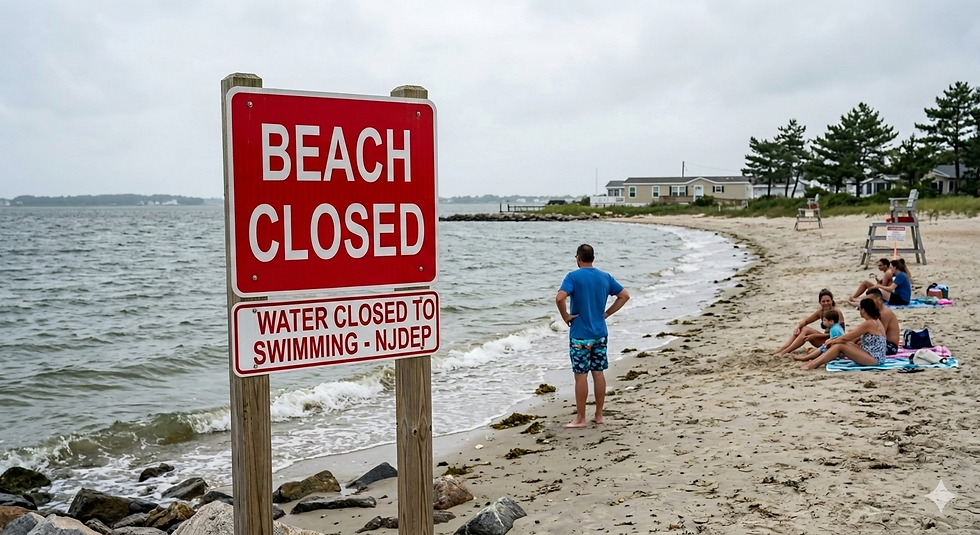
NEW JERSEY SHORE — As peak summer travel kicks into high gear, families planning quick day trips to the Jersey Shore are facing an unexpected hurdle. The New Jersey Department of Environmental Protection (DEP) has issued swimming restrictions and closures across select local waterfronts following routine water quality testing.
For travelers looking to beat the heat, the recent spikes in fecal bacteria serve as a stark reminder to check water conditions before packing the car.
One Beach Closed, Four Under Advisories
State environmental officials enforce a strict safety threshold for recreational waters. If a sample contains more than 104 colonies of Enterococci bacteria per 100 milliliters of water, a warning is triggered. While a single bad test places a beach under an advisory, consecutive failed tests result in a mandatory swimming ban.
As of this week, the current beach statuses include:
Beesley's Point Beach (Cape May County): Completely closed to swimming after back-to-back testing failures.
Beachwood Beach West (Ocean County): Under an active advisory after registering 370 colonies per 100 milliliters.
Cedar Point Beach (Ocean County): Under an active advisory with ongoing monitoring.
Lower Township Bay Beaches (Cape May County): Two separate testing sites remain under active swimming advisories.
(Note: Several Monmouth County ocean beaches briefly triggered alerts earlier in the week, but subsequent testing confirmed that water quality there has returned to safe levels.)
Rainfall and Runoff to Blame
According to environmental experts, these bacteria spikes are heavily tied to recent regional weather patterns. Heavy summer rainstorms generate massive stormwater runoff. This runoff sweeps pet waste, wildlife droppings, and urban debris directly into local rivers, bays, and coastal channels. In some areas, heavy rainfall can also overwhelm older infrastructure, leading to localized sewage overflows.

Risks to Day Trippers
Health officials strongly urge the public to respect the postings. Wading or swimming in contaminated water significantly increases the risk of recreational water illnesses. Day trippers exposed to elevated bacteria levels could experience gastrointestinal issues like vomiting and diarrhea, alongside ear, eye, throat, or skin infections.
Fortunately, water quality conditions shift quickly with the tides. Travelers are advised to check the state's real-time water monitoring map at NJBeaches.org before heading out to ensure their destination is clear and safe for swimming.



Comments